
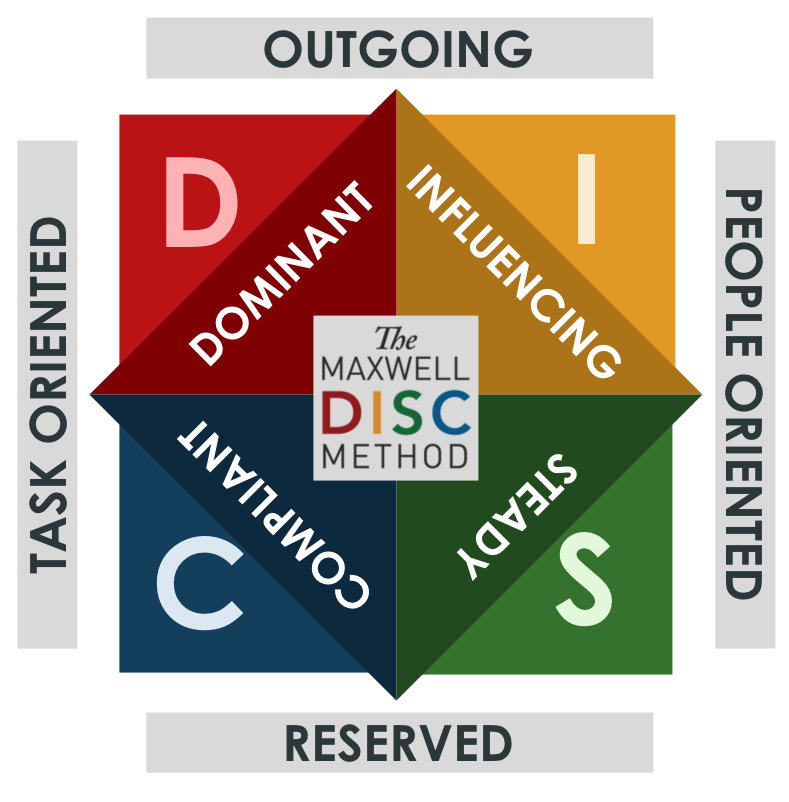
DISC is a behavioral assessment tool based on the theory developed by psychologist William Moulton Marston. It categorizes behavior into four primary types:
- Dominance (D): Focuses on results, confidence, and assertiveness. High D individuals are direct, decisive, and goal-oriented.
- Influence (I): Centers on social interactions, enthusiasm, and communication. High I individuals are outgoing, persuasive, and optimistic.
- Steadiness (S): Emphasizes cooperation, patience, and reliability. High S individuals are calm, supportive, and team-oriented.
- Conscientiousness (C): Focuses on quality, accuracy, and expertise. High C individuals are detail-oriented, analytical, and systematic.
Applications:
- Personal Development: Enhances self-awareness and interpersonal skills.
- Team Building: Improves communication and collaboration by understanding diverse behaviors.
- Leadership Training: Helps leaders adapt their style to better manage and motivate teams.
- Conflict Resolution: Identifies and addresses behavioral clashes.
How It Works:
Participants complete a questionnaire, and the results are analyzed to determine their dominant behavioral traits. These insights are used to improve interactions and effectiveness in various contexts.
Key Points:
- Not a Personality Test: Focuses on observable behaviors, not intrinsic personality traits.
- Adaptability: Encourages adapting behavior to different situations.
- Non-Judgmental: Aims to understand, not label or judge.

Reviews
There are no reviews yet.