
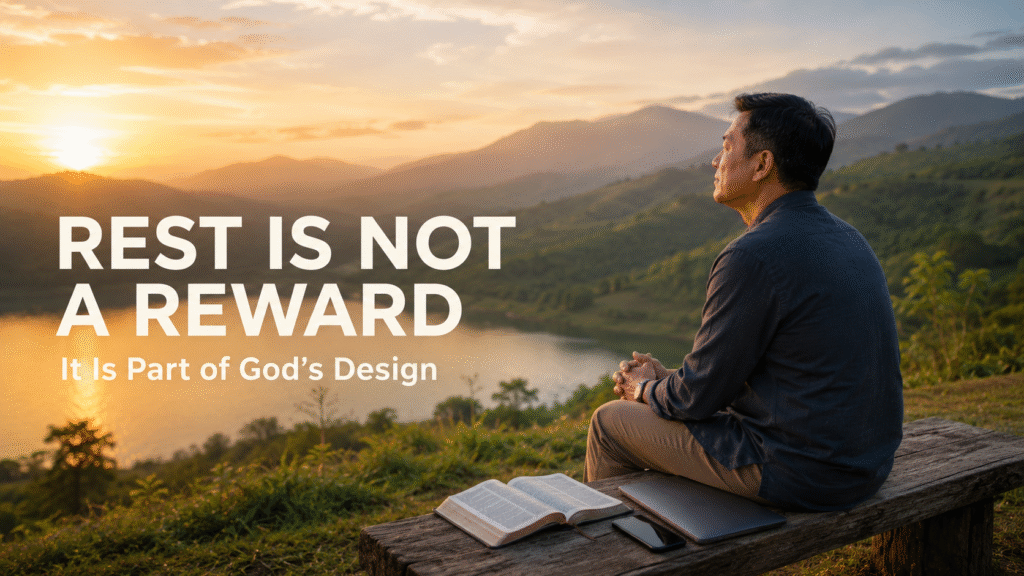
Rest Is Not a Reward—It Is Part of God’s Design
I will be honest.
When I was an employee, I was a workaholic.
At the time, I thought working hard was simply part of being responsible. But looking back, I realized that my drive came from something deeper.
It came from fear.
When I lost my government scholarship in college, I was forced to become a working student. That experience taught me to persevere, take responsibility, and work hard for what I wanted.
Those were valuable lessons.
But the experience also planted an unhealthy belief in my mind: resources are limited, opportunities are scarce, and there may not be enough for everyone.
If I wanted to survive, I had to work harder.
If I wanted a secure future, I had to keep moving.
If I stopped, someone else might get ahead of me.
I call this a “poverty mentality”—the fear that there will never be enough.
That fear drove me to succeed. As my career progressed, every promotion and achievement gave me a greater sense of security. I believed I was preparing for the future.
But without realizing it, I was also teaching myself that stopping was dangerous.
Rest felt irresponsible.
Slowing down felt like falling behind.
Doing nothing made me feel guilty.
I thought I had already overcome that mentality. Then I became an entrepreneur, and the old fears came back.
The Business Never Stops Calling
Entrepreneurs carry a weight that many people do not see.
We think about employee salaries, sales, revenue, products, customers, competition, cash flow, and the future of the business.
There is always another problem to solve.
Another client to call.
Another opportunity to pursue.
Another task that feels urgent.
Even when we leave the office, the business often follows us home.
Our bodies may be sitting at the dinner table, but our minds are still solving problems.
Our families may be talking to us, but part of us is already preparing for tomorrow’s meeting.
We may lie down at night, but our minds refuse to sleep.
This was the pattern I followed for a long time. I did not give my body enough time to relax, recover, and renew itself.
Eventually, it affected my health.
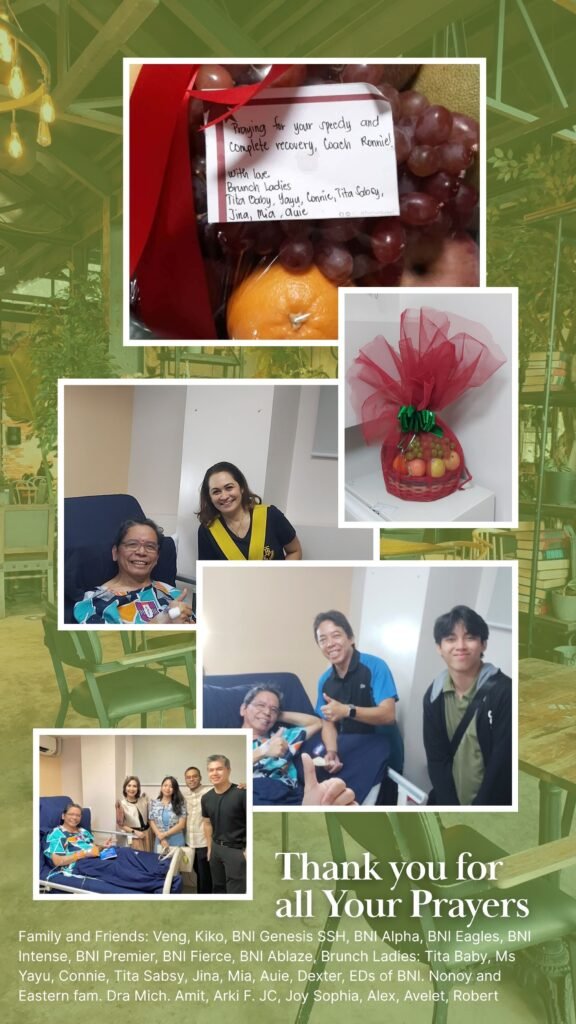
Recently, I was hospitalized. I found myself alone in the ICU, still thinking about the tasks I could not complete. I had to call my clients and tell them that I could not attend to them for the moment.
My body was demanding rest, but my mind was still trying to work.
That experience confronted me with a painful truth:
If we refuse to rest voluntarily, our bodies may eventually force us to stop.
God Designed Us to Rest
The Bible does not describe rest as laziness.
Rest is part of God’s design.
After creating the heavens and the earth, God rested on the seventh day. He did not rest because He lacked strength. He rested to establish a rhythm for life.
There is a time to create.
There is a time to work.
And there is a time to stop.
God later commanded His people:
“Remember the Sabbath day by keeping it holy.”
—Exodus 20:8
The Sabbath was not merely a day without work. It was a declaration of trust.
When we stop working, we acknowledge that God continues to work.
We remind ourselves that the world does not depend entirely on us. Our businesses, careers, families, and futures remain in God’s hands.
This is difficult for entrepreneurs because we are accustomed to carrying responsibility. We create opportunities, solve problems, lead people, and make decisions.
But there is a dangerous difference between accepting responsibility and believing everything depends on us.
We are responsible for our businesses, but we are not sovereign over them.
We are stewards. God is still the Provider.
Rest Is an Act of Faith
A scarcity mindset says, “If I stop, I will lose something.”
Faith says, “God can provide even when I rest.”
A workaholic mindset says, “Everything depends on me.”
Faith says, “I will do my best, but God remains in control.”
This is why rest is more than a physical practice. It is a spiritual discipline.
When we observe the Sabbath, we release our need to control every outcome. We make room to worship, reflect, recover, and reconnect with the people we love.
Jesus said:
“The Sabbath was made for man, not man for the Sabbath.”
—Mark 2:27
The Sabbath is a gift. It protects us from becoming machines that measure our worth by productivity.
Your value is not determined by the number of tasks you complete.
You are a human being—not a human doing.
Your Business Needs a Rested Leader
Rest does not make you less effective. It prepares you to become a better leader.
A rested leader thinks more clearly.
A rested entrepreneur makes wiser decisions.
A rested business owner responds with greater patience, creativity, and compassion.
An exhausted leader, however, becomes reactive. Small problems begin to feel like emergencies. Important decisions are made from anxiety. Relationships suffer, and the joy of building the business slowly disappears.
If your business cannot function whenever you stop working, your need for rest may be revealing a deeper problem.
Perhaps you need better systems.
Perhaps you need to delegate more.
Perhaps you need to develop other leaders.
A healthy business should not depend entirely on one exhausted person.
Five Ways to Practice Better Rest
Rest rarely happens accidentally. We must make room for it.
Here are five practical ways to begin:
1. Schedule a weekly Sabbath
Choose one day, or a consistent period each week, when you stop doing regular business activities. Protect that time as seriously as you protect an important client meeting.
2. Define what restores you
Rest is more than sleeping. Worship, prayer, walking, reading, spending time with family, enjoying nature, and having an unhurried meal can restore your soul.
Choose activities that renew you instead of simply distracting you.
3. Disconnect from the business
Turn off unnecessary notifications. Avoid checking messages and reports. If you remain constantly connected, your body may stop working while your mind continues carrying the business.
4. Prepare your team
Delegate responsibilities and establish clear procedures before your rest day. Let your team know who can make decisions in your absence.
Rest becomes easier when the business has reliable people and systems.
5. Start small—but start
If taking an entire day feels impossible, begin with several uninterrupted hours. Create a rhythm you can sustain, then gradually protect a full Sabbath.
The goal is not perfection. The goal is learning to stop and trust.
Give Yourself Permission to Stop
Do not wait until your body forces you to rest.
Put down your phone.
Step away from your reports.
Spend time with God and your family.
Sleep. Walk. Worship. Reflect. Breathe.
You do not have to earn rest.
Rest is not the reward you receive when everything is finished—because in business, everything is never finished.
Rest is part of faithful and sustainable leadership.
Work hard, but trust God deeply.
Build your business, but protect your health.
Pursue your calling, but do not sacrifice the person God created you to be.
Sometimes, the most faithful and productive thing a leader can do is stop, breathe, and rest.


Thanks for the insights Bro! Praying for good health for you.
Sickness and tiredness is always a good reminder to honor the sabbath and the least choice is to rest. But it doesn’t have to reach the point where everything stops because of our health.
As you have shared from Mark 2:27, “The sabbath is made for man, and not man for sabbath.” Reason why Sunday (for other beliefs it is Saturday) is the day for majority of establishments to take a day off.
Selah is a good way to begin with sabbath. In hebrew it means pause. If we can take selah in every important and big decisions we make, it’s equally important for small decision like to rest or take a day off.
Thank you sir Ron for the 5 practical ways to better rest, these are great reminder and steps in making it meaningful and a must.