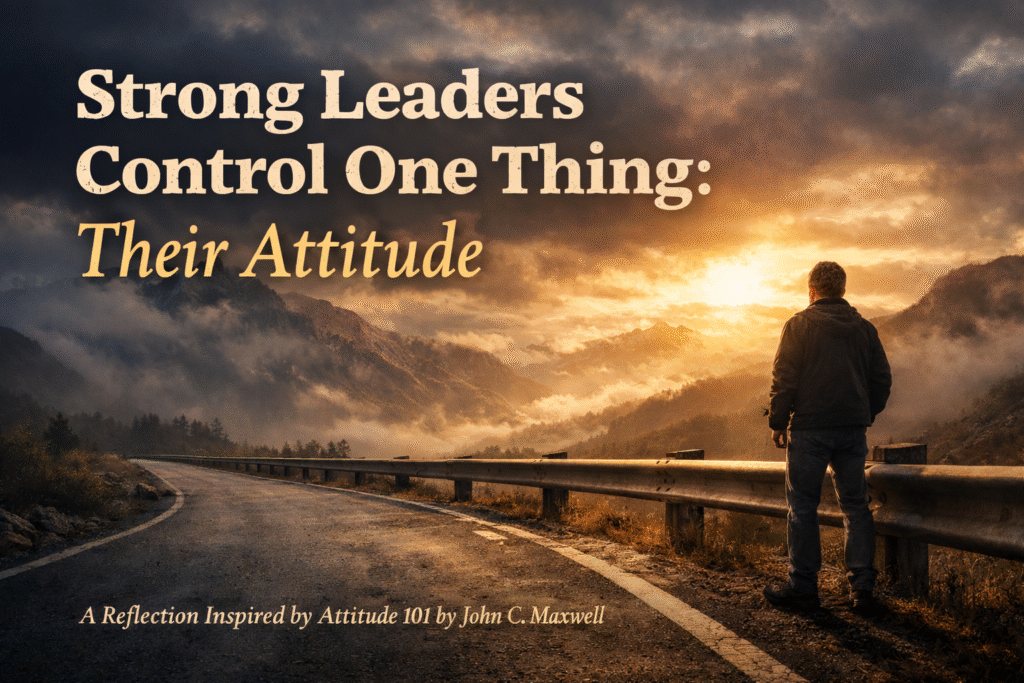
Strong Leaders Control One Thing: Their Attitude
A reflection inspired by Attitude 101 by John C. Maxwell
When Leadership Became Personal
In my four decades of leading people, I have experienced moments that deeply affected me emotionally.
There was a season when I was taken advantage of by leaders whom I trusted.
I felt betrayed.
Honestly, my first response was not noble.
I was angry.
I wanted to get back at the people who wronged me.
I felt justified.
But leadership is not tested when everything is fair.
It is tested when everything feels unfair.
What I eventually realized changed my leadership forever.
The real issue was not what they did.
The real issue was how I responded.
At first, I saw it as a setback.
Later, I saw it as a setup—something God allowed to shape my character and strengthen my leadership.
By God’s grace, I adjusted my attitude before my attitude defined me.
Because emotion is powerful.
If you are not deeply self-aware, your response—and your attitude—can quietly destroy your influence.
That season became a guardrail for me.
And this blog is my attempt to share those guardrails with you.
The Real Leadership Battle Is Internal
Most leadership struggles are not strategic.
They are emotional.
You will be:
-
Misunderstood
-
Criticized
-
Overlooked
-
Taken for granted
You cannot control what people do.
But you can control the meaning you assign to it.
In Attitude 101, John Maxwell reminds us:
Your attitude determines your altitude.
Leadership rises or falls on that principle.
Talent is helpful.
Experience is valuable.
Position gives authority.
But attitude determines influence.
Why Attitude Is Everything
Maxwell explains that attitude affects:
-
How you see problems
-
How you respond to failure
-
How others respond to you
-
Whether you grow or shrink under pressure
When I felt betrayed, I had two options:
-
Protect my ego.
-
Protect my leadership.
If I allowed bitterness to grow, I might have felt justified—but I would have weakened my influence.
If I adjusted my attitude, I could grow stronger instead of smaller.
Attitude is not denial.
It is a disciplined perspective.
Leadership Paradoxes Require the Right Attitude
Leadership is full of contradictions:
You serve people who sometimes complain.
You build systems others criticize.
You make decisions that not everyone understands.
Without the right attitude, these moments can lead to resentment.
With the right attitude, they produce maturity.
Let me share what I learned.
1. Choose Response Over Reaction
Emotion demands immediate action.
Maturity chooses a thoughtful response.
When I was hurt, I wanted to retaliate.
But retaliation would have done more harm than good.
A healthy attitude asks:
“What response protects the mission?”
Not:
“What response satisfies my emotion?”
That shift changed everything.
2. Reframe the Story
When you feel wronged, the story in your mind becomes powerful.
If the story is:
“I’ve been betrayed.”
You grow defensive.
If the story becomes:
“This is shaping me.”
You grow resilient.
Sometimes what feels like injustice becomes preparation.
Attitude determines which interpretation you adopt.
3. Protect Your Integrity, Not Your Pride
In painful seasons, pride screams louder than wisdom.
But protecting your pride costs your future.
Protecting your integrity protects your legacy.
Maxwell teaches that a strong attitude does not eliminate hardship—it transforms how we process it.
When your attitude remains steady, your leadership remains credible.
4. Remember the Greater Return
Leadership is not about applause.
It is about reproduction.
The greatest return on leadership is:
-
Leaders you developed
-
Values you preserved
-
Culture you sustained
If I had allowed bitterness to take root, I might have won a short-term emotional victory—but lost long-term influence.
Attitude determines which victory you pursue.
The Invisible Power of Attitude
Attitude is contagious.
Your team may not always follow your instructions.
But they will absorb your spirit.
If you become cynical, culture becomes cautious.
If you remain grounded, culture becomes stable.
Over time, people do not remember every decision you made.
They remember how you made them feel.
And that is shaped by your attitude.
The Transformation That Happens First
When I adjusted my attitude, something shifted internally:
-
I became calmer.
-
I became clearer.
-
I became less reactive.
-
I became more focused on purpose than on pain.
The external situation did not change overnight.
But I changed.
And when the leader changes, everything changes.
That is the power of attitude.
A Final Word to Leaders
You will be tested.
You will feel overlooked.
You will experience seasons when doing the right thing feels costly.
In those moments, remember:
Attitude is not accidental.
It is intentional.
Attitude is not weakness.
It is discipline.
Attitude is not a denial of pain.
It is a direction in the middle of pain.
If you learn to cultivate the right attitude, you will not only become a better leader but also a stronger person.
And when leadership feels heavy…
When emotions rise…
When you are tempted to react instead of respond…
Lead anyway.
But lead with the attitude that builds people, culture, and legacy.