The Relational Power of Leadership
Why People Follow Leaders They Trust
“Leadership is influence—nothing more, nothing less.” — John C. Maxwell
Many people think leadership is about position.
They believe leadership begins when someone receives a title, authority, or a corner office. But if titles alone created leadership, every manager would inspire people, every business owner would have loyal teams, and every organization would be healthy.
Yet we know that is not true.
Some leaders have authority but very little influence.
Others have no formal title yet inspire trust, energy, and commitment wherever they go.
Why?
Because leadership is relational before it is organizational.
People do not follow leaders simply because they have power. They follow leaders because they feel connected, valued, and inspired.
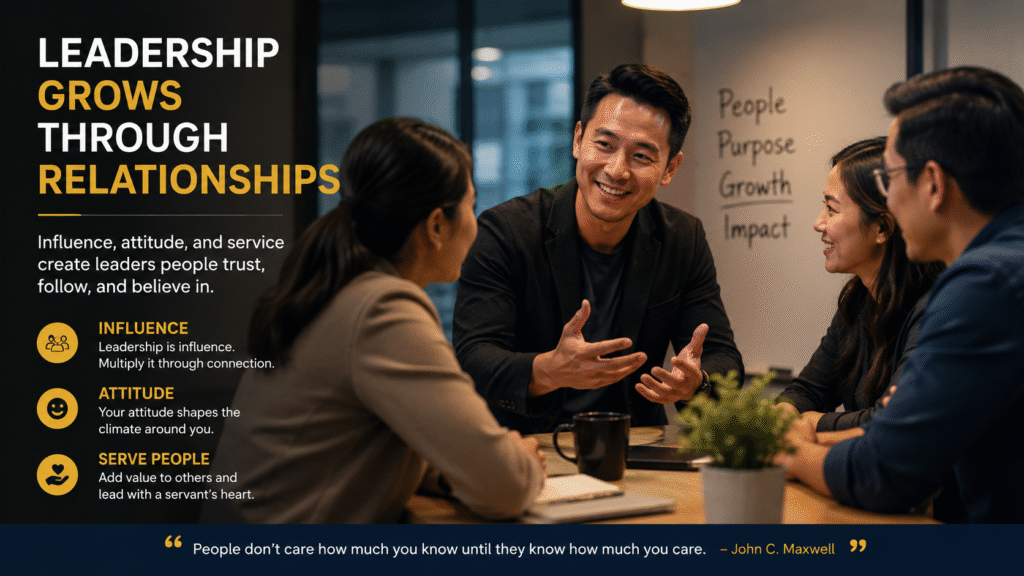
In Developing the Leader Within You 2.0, Maxwell explains that leadership grows through influence, attitude, and service. These are relational qualities that create trust and emotional connection.
And in today’s world, relational leadership matters more than ever.
The Problem: Many Leaders Focus on Tasks More Than People
In business, it is easy to become task-driven.
Leaders become focused on:
-
Targets
-
Deadlines
-
Sales
-
Operations
-
Productivity
-
Expansion
None of these is wrong. Businesses need results.
But when leaders become consumed with performance alone, people eventually begin to feel invisible.
Teams may comply for a season, but they rarely become fully committed.
Why?
Because people do not want to feel managed like machines.
They want to feel valued like human beings.
This is where many organizations quietly struggle.
Communication becomes transactional.
Meetings become mechanical.
Pressure increases.
Morale declines.
And eventually, leaders wonder why their teams lack energy, initiative, or loyalty.
The answer is often relational.
People disconnect emotionally before they disengage physically.
Leadership is never only about getting work done.
It is about bringing people with you.
The Guide: Leadership Is Influence
Maxwell teaches that leadership is influence.
That means leadership is not measured by position.
It is measured by impact.
True leadership happens when people willingly trust your direction and choose to follow your example.
This completely changes the way we think about leadership.
It means:
-
Parents lead
-
Teachers lead
-
Business owners lead
-
Team members lead
-
Entrepreneurs lead
-
Coaches lead
Every day, we influence people through our words, attitudes, decisions, and behavior.
The question is not whether we influence people.
The question is: What kind of influence are we creating?
Because influence is always happening.
In the book, Maxwell explains that people follow leaders at different levels of influence. At first, people may follow because of position. But sustainable leadership grows when leaders build relationships, create results, and genuinely develop people.
This is especially important for entrepreneurs.
A business can grow through systems, but it becomes healthy through relationships.
Healthy cultures are relational cultures.
Part 1: Influence Grows Through Connection
Many leaders try to gain influence through control.
But real influence grows through connection.
Maxwell explains that people do not care how much a leader knows until they know how much the leader cares.
That principle sounds simple, but it changes everything.
People respond differently when they feel:
-
Heard
-
Respected
-
Encouraged
-
Supported
-
Valued
Strong relational leaders understand that leadership is not about impressing people.
It is about understanding people.
They ask questions.
They listen carefully.
They remember names and stories.
They notice struggles.
They create trust through consistency.
In Filipino culture, this matters deeply.
Relationships are central to how people work together. Trust is not built only through competence but through connection. Teams often give their best not merely because of salary or systems, but because they feel emotionally connected to their leaders.
People may forget instructions.
But they rarely forget how leaders made them feel.
This is why leadership influence is relational at its core.
Part 2: Attitude Creates the Emotional Climate
Every leader carries emotional influence.
Whether leaders realize it or not, their attitude affects the atmosphere of the entire organization.
Maxwell calls attitude the “extra plus” in leadership because it shapes resilience, energy, and perspective.
When leaders become negative, fearful, reactive, or constantly discouraged, teams absorb that energy quickly.
But when leaders remain hopeful, calm, and solution-focused during difficult seasons, people gain confidence.
Attitude is contagious.
This became especially clear during difficult business seasons over the past few years. Teams did not only need strategies. They needed emotional stability from leadership.
People looked to leaders for:
-
Direction
-
Perspective
-
Calmness
-
Encouragement
-
Hope
This does not mean leaders pretend problems do not exist.
Healthy leaders acknowledge reality honestly while still communicating belief in a better future.
That is resilience.
Strong leaders understand that attitude is not denial.
It is a disciplined perspective.
For entrepreneurs, this is critical because businesses inevitably face:
-
Economic pressure
-
Operational challenges
-
Staff turnover
-
Delays
-
Uncertainty
-
Fatigue
In those moments, the leader’s emotional posture becomes part of the culture.
A leader’s attitude often determines whether people panic or persevere.
Part 3: The Heart of Leadership Is Serving People
Perhaps the greatest shift in leadership happens when leaders stop asking:
“How can people help me succeed?”
And start asking:
“How can I help people grow?”
Maxwell teaches that leadership is ultimately about serving others.
This is the heart of servant leadership.
Servant leaders do not see people as tools for productivity.
They see people as individuals with value, potential, and purpose.
This mindset transforms leadership.
Instead of controlling people, leaders empower them.
Instead of taking credit, leaders celebrate others.
Instead of protecting ego, leaders develop people.
Servant leadership is not a weakness.
It is a leadership mature enough to value people above personal pride.
This kind of leadership creates:
-
Loyalty
-
Trust
-
Psychological safety
-
Team unity
-
Long-term culture health
People may work for pay, but they give their hearts to leaders who genuinely care about them.
And perhaps this is the greatest relational truth in leadership:
People will follow leaders who consistently add value to their lives.
The Plan: How to Strengthen Relational Leadership
If leadership grows through relationships, then leaders must become intentional relational builders.
Here are three practical starting points:
1. Increase Personal Connection
Spend less time only managing tasks and more time understanding people.
Ask:
-
How are you really doing?
-
What challenges are you facing?
-
How can I support you?
Connection builds trust.
2. Guard Your Attitude Daily
Your emotional posture shapes your team more than you realize.
Choose:
-
Gratitude over negativity
-
Solutions over blame
-
Calmness over panic
-
Encouragement over criticism
Leaders reproduce emotional culture.
3. Serve Before You Expect
Look for ways to add value consistently.
Support growth.
Recognize effort.
Encourage people.
Develop others intentionally.
Great leaders do not use people to build the vision.
They help people grow through the vision.
The Vision: Leadership That People Want to Follow
At the end of the day, leadership is not only about building successful organizations.
It is about building healthy relationships that create meaningful impact.
People are drawn to leaders who:
-
Listen well
-
Encourage consistently
-
Lead with humility
-
Stay positive during pressure
-
Serve without ego
-
Value people genuinely
Because relational leadership creates something deeper than compliance.
It creates trust.
And trust is the true currency of leadership.
The leaders who leave the greatest impact are rarely remembered only for their intelligence or authority.
They are remembered for how they treated people.
For how they inspired others.
For how they brought hope.
For how they made people feel seen, valued, and empowered.
Because leadership grows through relationships.
And when leaders learn to influence, encourage, and serve people well, they do more than build organizations.
They build lives.
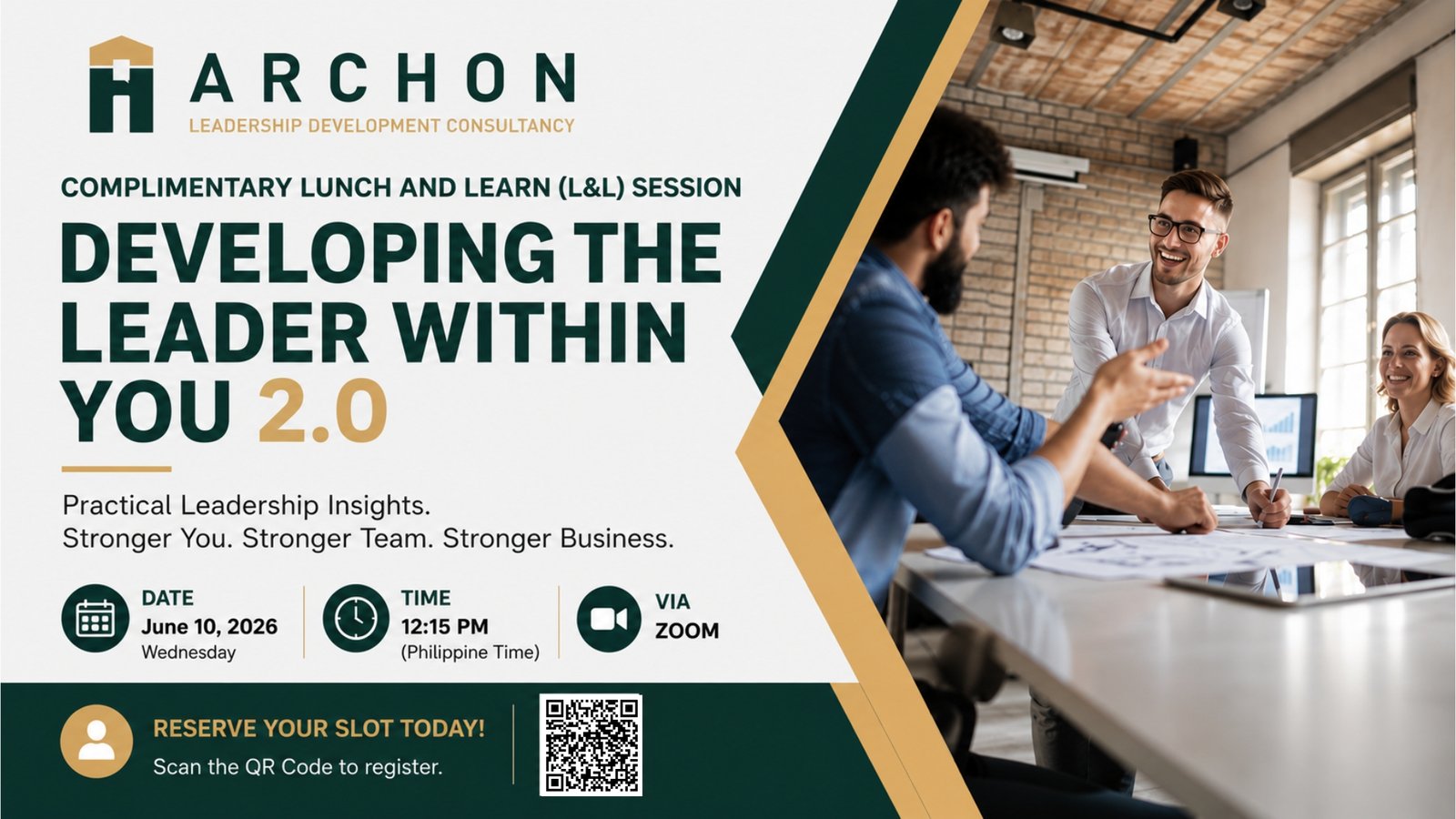
To learn more about the subject, I invite you to join us for a complimentary Lunch and Learn (L&L) Session on June 10, 2026, Wed., from 12:15 – 1:30 PM via Zoom. Click to REGISTER NOW.
This special session is designed to give entrepreneurs and business leaders practical leadership insights they can apply immediately in their organizations and on their personal leadership journeys.