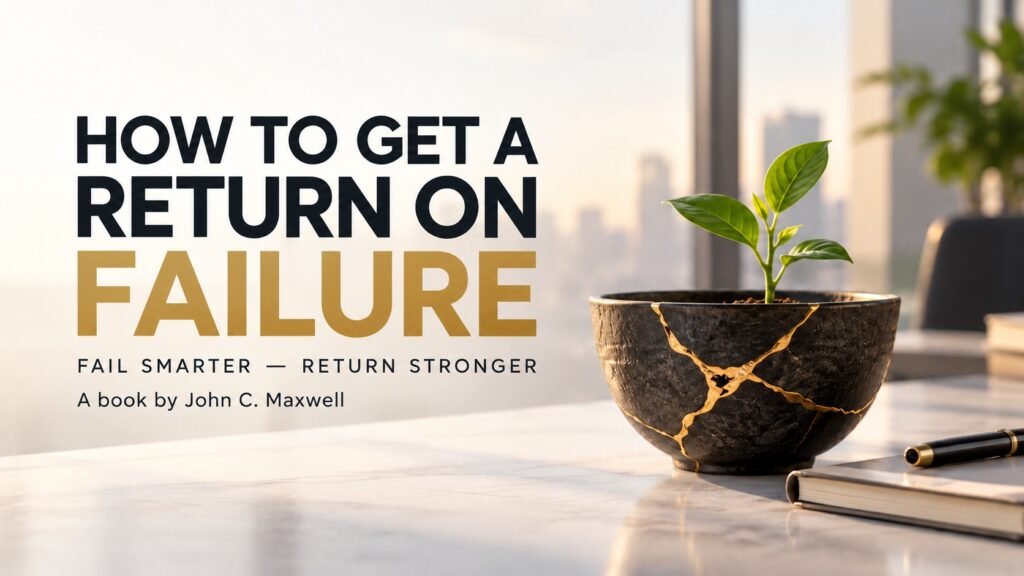
How to Get a Return on Failure: Fail Smarter, Return Stronger
What John C. Maxwell’s book taught me about learning from setbacks
In my previous blog, I wrote about failing forward and how failure can become a friend—a partner in our journey toward success.
Today, I want to share what I learned about getting a return from failure.
When I hear the word return, I usually think of something positive: reaching a milestone, achieving a business goal, or meeting a sales target. I associate returns with progress and accomplishment. I never thought much about getting a return from failure.
That changed when I read John C. Maxwell’s book, How to Get a Return on Failure: Fail Smarter—Return Stronger. It helped me see that failure can hold valuable lessons—but we have to be willing to examine what happened, learn from it, and use that learning to move forward.
Maxwell’s message is simple: We cannot avoid every mistake or setback, but we can choose how we respond. When we learn from failure and apply what it teaches us, we can make it an investment in a stronger future.
Failure Can Affect More Than the Business
When business owners struggle to move forward after failure, its impact can reach every part of their business and personal life.
A setback can shake an owner’s confidence. They may question their judgment and wonder whether they can succeed again. Fear of repeating the mistake can lead them to avoid reasonable risks, delay important decisions, or miss opportunities to serve new customers and build partnerships.
The effects can reach their team and family, too. Overthinking and lost motivation can make it harder to find creative solutions. Frustration or shame can strain relationships with employees, business partners, customers, and loved ones. Meanwhile, hesitation and unresolved problems can create financial and operational pressure.
Failure may be part of building a business. Staying stuck in it can make it harder to lead, decide, and move forward.
Eight Lessons from Maxwell’s Book
Maxwell organizes his message around eight lessons. Together, they offer a practical way to move from regret and fear toward learning and action.
1. See Failure as an Investment in Your Future
Failure feels like a loss when all we see is what went wrong. But a difficult experience can also reveal a weakness in our plan, a gap in our skills, or an assumption we need to question.
The return comes from what we do with that insight. A failure we examine can help us make a wiser decision next time.
2. Keep Success and Failure Together
Success and failure are both part of our journey. If we focus only on success, we may become overconfident and stop learning. If we focus only on failure, we may lose hope and underestimate our ability to recover.
Keeping both in perspective helps us stay grounded. Success reminds us that progress is possible. Failure reminds us that there is always more to learn.
3. Get Over Failure by Getting Over Yourself
After a setback, it is easy to become consumed by embarrassment, regret, or concern about what others think. Those feelings can keep us from taking the next step.
Maxwell encourages us to shift our attention from self-protection toward growth and contribution. We can acknowledge the disappointment without allowing it to define who we are or control what we do next.
4. Use Failure to Make Yourself Better
Failure can become a teacher when we are willing to reflect.
What happened? What could I have done differently? What do I need to learn or change?
These questions help us take responsibility without getting trapped in blame. The purpose is not to punish ourselves for getting something wrong. It is to become better prepared for what comes next.
5. Embrace the Value of Hard
Building something meaningful takes work. Setbacks do not always mean we are on the wrong path. Sometimes they are part of the effort required to grow.
We may need to adjust our approach, ask for help, or develop new skills. Difficulty alone does not mean we should give up.
6. Practice the Cycle of Improvement
Maxwell describes improvement as a continuing cycle: test, fail, evaluate, learn, improve, and reenter.
For a business owner, this might mean testing a new offer on a small scale, reviewing customer feedback, improving the process, and adjusting before investing further. We make progress by taking thoughtful action, learning from the result, and trying again.
7. Learn the Difference Between Good Misses and Bad Misses
A setback can help us when we recognize it, evaluate it, and make a change. It becomes more damaging when we ignore the warning signs or repeat the same action without learning.
If an approach is not working, we can examine why, adjust, and decide whether to continue, change direction, or stop. The key is to respond honestly.
8. Lead Others Through Failure
Leaders influence how their teams respond to mistakes. When people fear blame, they may hide problems and avoid trying new ideas. When leaders make room for honest reflection, people can speak up, learn, and improve.
This does not mean ignoring responsibility. It means addressing what happened and helping people move toward a better result. Leaders can also share their own lessons to remind others that setbacks are part of growth.
The Return Comes from What We Do Next
Maxwell’s book reminded me that the goal is not to enjoy failure or pretend it does not hurt. The goal is to keep failure from becoming the final word.
When a setback happens, pause long enough to learn from it. Identify what you can control. Decide what needs to change. Then choose one next step and take it.
For a business owner, that step might be reviewing a decision, improving a system, having an honest conversation, or asking someone you trust for guidance. It may be small, but it moves you forward.
I used to think a return came only from something good that happened. Now I see that a return can also come from a difficult experience—when we gain insight, change our approach, and return stronger.
Failure can be part of the journey. What matters is whether we let it stop us or use it to grow.
If you feel stuck and cannot move forward after a failure, you’re welcome to book a free, one-hour discovery call with me. There is no commitment. I simply want to help you find clarity and identify a next step.
What lesson from a past failure can help you make a better decision today?